
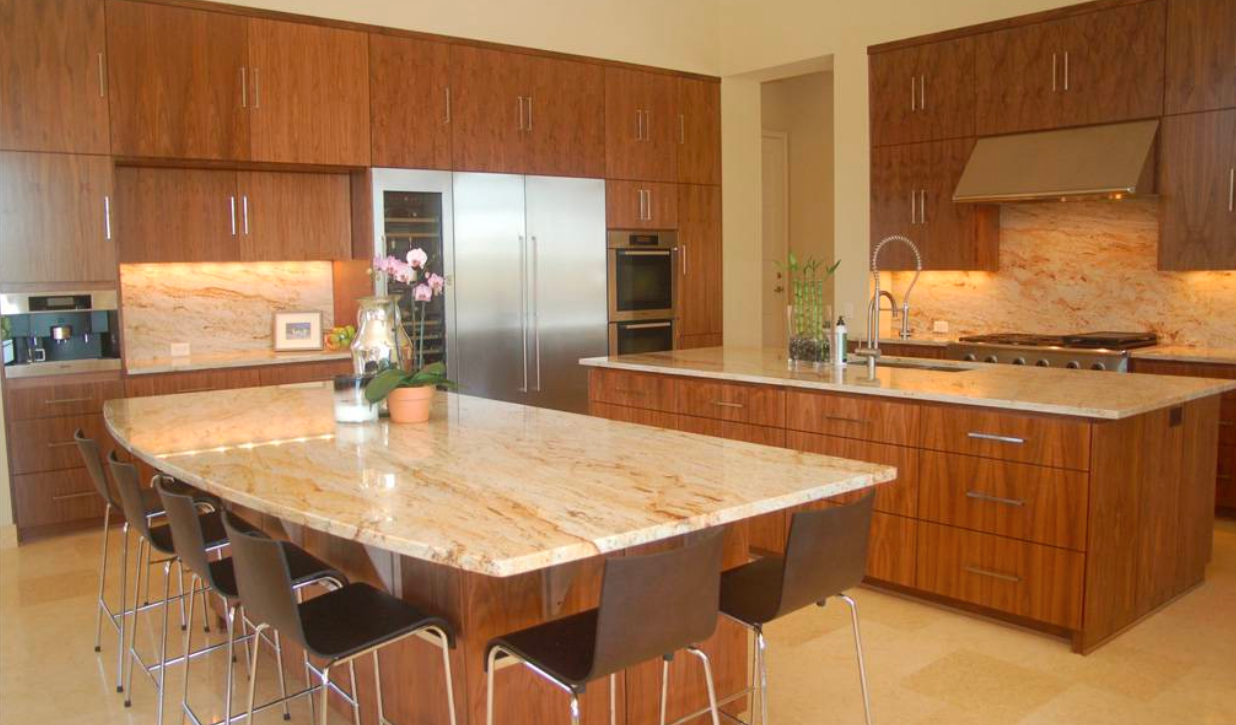
Walk into ten houses with granite countertops. You’ll see the same three patterns. That speckled beige. That black with white flecks. Maybe that reddish-brown if someone’s feeling adventurous.
Pure Stone Surfaces brings custom fabrication to people who want their kitchen to feel like theirs. Not a showroom display. Not their neighbor’s kitchen. Theirs. Award-winning precision. Timeless designs. The kind of craftsmanship where you notice the details.
What Custom Fabrication Actually Means
Custom Kitchen Countertops aren’t just about picking a slab color. That’s step one. Real custom means the fabricator considers your space how the veining flows across an L-shaped counter. Whether the pattern works with your backsplash. How the edge profile affects the overall look.
Mass production shops cut slabs to standard dimensions. Ship them out. Done. If the pattern doesn’t quite line up? Too bad. You get what you get. Stone countertops done properly require someone looking at your actual layout. Arranging templates. Planning where seams fall. Making sure the visual flow makes sense.
The Slab Selection Process
You don’t pick from photos online. You see actual slabs. In person. Under proper lighting.
Photos lie. That gorgeous white marble with grey veining? Might look completely different in your kitchen’s natural light. The color shifts. The veining pattern that looked delicate online could be overwhelming in real life.
Natural stone varies. Every slab is unique. What you see is literally what you get, that specific piece of stone, not “something similar.”
Engineered quartz offers more consistency. Pure Stone Surfaces quartz mimics marble aesthetics without the maintenance headaches. Through-body veining. Looks natural. Performs better than actual marble in busy kitchens.
Why Edge Profiles Matter More Than You Think
Most people obsess over stone color. Then pick a random edge profile without much thought.
Edge profiles dramatically change the countertop’s character. Sleek modern beveled edges. Traditional ogee profiles. Simple eased edges that let the stone shine. Wrong edge profile makes expensive stone look cheap. Right edge completes the design.
Good fabricators walk you through options. Show samples. Explain how different profiles work with different stone types and kitchen styles.
Undermount Sink Integration
Sink installation seems straightforward. Cut a hole. Drop the sink in. Right?
Except the way sinks attach to stone matters for longevity. Cheap installations use silicone adhesive. Works initially. Fails over time when water seepage weakens the bond. Professional installations use mechanical anchors. Steel brackets actually bolted into the stone. The sink cannot come loose. Water cannot compromise the attachment.
Reinforcement You Cannot See
Stone has thin areas near sinks and cooktops. Those narrow rails of material fronting or backing cutouts are structurally weaker than solid surface area.
Professional fabricators reinforce these areas. Threaded rods epoxied into channels cut in the stone’s underside. Dramatically increases flexural strength. Most customers never see this reinforcement. It’s underneath. But it’s the difference between stone that lasts decades versus stone that cracks within years.
Backsplashes and Integrated Designs
Matching backsplash transforms the space. Not matching it makes countertops feel incomplete.
Full-height backsplashes. Short four-inch profiles. Dramatic book-matched slabs extending up the wall. Options vary based on budget and design goals. Getting the pattern to flow naturally from counter to backsplash requires planning during template layout. Cannot be an afterthought.
Bathroom Vanities Deserve the Same Attention
Kitchen countertops get all the attention. Bathroom vanities get whatever’s left over. Wrong approach. Bathrooms are smaller. Stone patterns more visible. Details matter more, not less. Plus bathrooms have different requirements. Standing water around sinks. Makeup and cosmetics. Different cleaning products. Stone selection and sealing needs consideration.
The Installation Timeline
Kitchen Countertop Installation typically takes two to four weeks from slab selection to completion. Template creation happens first, usually after cabinets are installed. Then cutting, polishing, edge profiling, and reinforcement all happen in the fabrication shop. Installation day is just mounting the finished pieces.
Sealing and Maintenance
Natural stone needs sealing. Granite annually usually. Marble more frequently, especially in kitchens. Quartzite varies by stone. Engineered quartz doesn’t require sealing at all. Non-porous surface. Big advantage for busy households. Fabricators should explain maintenance upfront, not after installation when you’re wondering why your marble is staining.
What Quality Costs
Custom stone fabrication costs more than big-box store countertops. Obviously. You’re paying for craftsmanship. Proper reinforcement. Mechanical sink mounting. Thoughtful slab selection and layout. Experience that prevents problems.
Budget installations look fine initially. Problems emerge later. Cracks. Sink issues. Seam problems. Staining from improper sealing. Quality fabrication is an investment. But countertops last decades. Worth doing right.
Frequently Asked Questions
Q.1 How long does custom stone countertop fabrication and installation take?
Ans. Most projects take two to four weeks from slab selection to installation. Templates are created after cabinets are in, fabrication happens in the shop, and installation day is typically fast once everything is ready.
Q.2 Do I need to seal my stone countertops after installation?
Ans. Yes, for natural stone. Granite needs sealing annually, marble more frequently, and quartzite varies. Engineered quartz skips sealing entirely since its non-porous surface resists staining on its own.
Q.3 What is the difference between natural stone and engineered quartz countertops?
Ans. Natural stone is one-of-a-kind. Every slab is unique and what you pick is exactly what you get. Engineered quartz offers more consistency, mimics natural stone, and requires less maintenance, making it a practical choice for busy kitchens.
Q.4 Why does the edge profile matter when choosing countertops?
Ans. Edge profiles shape the entire character of your countertop. The wrong profile can make expensive stone look off. A good fabricator walks you through options to find one that fits your stone type and kitchen style.