

Bathroom countertops play an essential role in both the functionality and style of a bathroom. From daily water exposure to cleaning products and constant use, these surfaces must be durable while maintaining their appearance over time. When planning custom bathroom countertops, homeowners need to consider the material, installation quality, and long-term maintenance.
This guide explores the most important aspects of custom bathroom countertops, materials, costs, and design ideas, helping homeowners make informed decisions.
Whether you are renovating a small guest bathroom or designing a new master suite, understanding the options available can help you choose a countertop that performs well and enhances the overall space.
Custom Bathroom Countertops Materials: Choosing the Right Surface
Selecting the right material is one of the most important decisions when planning custom vanity countertops. The material you choose will affect durability, maintenance, cost, and overall appearance.
Below are some of the most popular materials used for bathroom vanity tops.
Quartz
Quartz is an engineered stone made from crushed quartz particles combined with resins. It is one of the most popular choices for bathroom countertops because it is non-porous, stain-resistant, and very durable.
Key advantages include:
- Resistant to moisture and bacteria
- No sealing required
- Available in many colors and patterns
- Consistent appearance
This is often recommended for busy bathrooms because it requires minimal maintenance while offering a refined look.
Granite
Granite is a natural stone valued for its durability and unique patterns. Each slab has its own natural variations, giving granite countertops a distinctive appearance.
Benefits of granite include:
- Strong resistance to heat and scratches
- Natural beauty with unique patterns
- Good performance in humid environments
This material typically requires periodic sealing to maintain stain resistance, but it remains a reliable option for many bathroom renovation projects.
Marble
Marble has long been associated with luxury interiors. Its elegant veining and timeless appeal make it a popular choice for master bathrooms and decorative vanity areas.
However, marble is more porous than other materials and may require extra care. Regular sealing and gentle cleaning help maintain its appearance.
It is best suited for homeowners who value aesthetics and are comfortable performing occasional maintenance.
Quartzite
Quartzite is often confused with quartz, but it is actually a natural stone formed through intense heat and pressure. It offers a marble-like appearance with greater hardness and durability.
Quartzite countertops:
- Provides strong scratch resistance
- Maintain natural stone beauty
- Require sealing similar to granite
For homeowners seeking natural stone with improved durability, quartzite is an excellent option.
Porcelain
Porcelain slabs have grown significantly in popularity for modern bathrooms. These surfaces are highly resistant to moisture, staining, and heat.
Advantages include:
- Extremely low maintenance
- Lightweight compared to natural stone
- Available in realistic marble or stone patterns
Porcelain is especially useful for bathrooms that experience frequent use or humidity.
Soapstone
Soapstone offers a distinctive matte finish and a smooth, natural feel. Unlike many natural stones, it is naturally non-porous, meaning it does not require sealing.
Over time, soapstone develops a soft patina that many homeowners appreciate. It works particularly well in classic, rustic, or artisan-style bathrooms.
Custom Bathroom Countertops Costs: What Affects the Price
Understanding custom bathroom countertops costs helps homeowners plan their renovation budget more accurately. Several factors influence the final price of a countertop project.
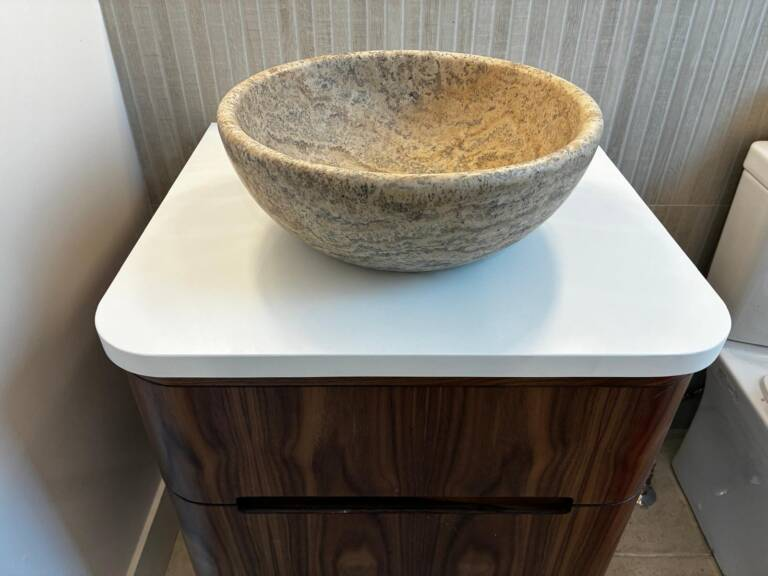
1. Material Type: Material selection has the biggest impact on price. In Denver and across Colorado, average installed costs typically fall within these ranges:
Quartz: $70 – $120 per sq. ft.
Granite: $60 – $110 per sq. ft.
Marble: $90 – $180 per sq. ft.
Quartzite: $100 – $200+ per sq. ft.
Porcelain: $60 – $120 per sq. ft.
Soapstone: $80 – $150 per sq. ft.
For most bathroom vanities, total installation costs may range between:
$500 – $1,500 for a single vanity
$1,200 – $3,500 for a double vanity
Premium custom designs can exceed $4,000
Prices may vary depending on fabrication complexity, material grade, and installation requirements.
2. Fabrication and Edge Profiles: Fabrication includes cutting the slab to fit the vanity, creating sink openings, and shaping edge profiles. Basic edges cost less, while decorative edges such as ogee or mitered designs increase fabrication time and price.
3. Vanity Size and Layout: A small vanity countertop requires less material and labor than a larger double-sink design. Custom layouts, unusual angles, or integrated sink designs also increase fabrication complexity.
4. Removal of Existing Countertops: If an existing countertop must be removed before installation, demolition and disposal may add to the project cost.
5. Installation Labor: Professional installation includes setting the slab, sealing natural stone surfaces, filling seams, and securing the countertop to the vanity structure.
Working with experienced fabricators is important to ensure proper fit and long-term durability.
For homeowners in Denver, working with an experienced countertop fabricator can help ensure accurate templating and a smooth installation process. PureStone Surfaces specializes in precision countertop fabrication and installation for kitchens and bathrooms, helping homeowners achieve a clean fit and durable finish tailored to their design goals.
How Bathroom Countertop Installation Works
Understanding the installation process helps homeowners plan their renovation timeline and avoid unexpected delays.
1.On-Site Measurement and Templating
A professional fabricator visits the home to take precise measurements of the vanity and surrounding walls. Accurate templating ensures the countertop fits perfectly.
2. Slab Selection
For natural stone materials such as granite or marble, homeowners are encouraged to view the actual slab before fabrication. Each slab has unique veining and color variations.
3. Fabrication
The slab is cut to match the template dimensions. Sink cutouts and edge profiles are created during this stage. Fabrication typically takes 5–10 business days, depending on complexity.
4. Installation
During installation, the countertop is carefully placed on the vanity cabinet, seams are sealed, and caulking is applied to protect against moisture.
Natural stone surfaces are sealed during installation, while materials like quartz and porcelain require no sealing.
Custom Bathroom Countertops Design Ideas for 2026
Bathroom design trends continue to evolve, and countertops often serve as the centerpiece of the vanity area. Here are several custom bathroom countertops design ideas gaining popularity in 2026.
Honed Stone Finishes
Matte or honed finishes create a softer, more natural appearance compared to high-gloss polished surfaces. They also help hide water spots and fingerprints more effectively.
Waterfall Countertop Edges: Waterfall edges extend the countertop material vertically down the side of the vanity, creating a seamless and contemporary look. This design works particularly well with bold stone patterns.
Integrated Sink Designs: Integrated sinks are carved from the same slab as the countertop, creating a seamless surface with no visible joints between the basin and vanity top.
This design enhances both appearance and ease of cleaning
Dark Stone Countertops: Deep charcoal, navy, and forest green stone surfaces are becoming more popular in modern bathroom designs. When paired with wood cabinetry or brass fixtures, darker countertops add depth and sophistication.
Natural Stone Feature Pieces: Some homeowners are choosing dramatic marble or quartzite slabs as focal points in luxury bathroom renovations. The natural veining of these materials creates a unique visual impact.
Tips for Choosing the Right Bathroom Countertop
When planning a bathroom renovation, a few practical considerations can help ensure the best results.
- Match materials to your lifestyle. Busy family bathrooms benefit from durable and low-maintenance surfaces such as quartz or porcelain.
- View natural stone slabs in person. Each slab is unique, so seeing the exact material helps avoid surprises.
- Request detailed quotes. Separating material, fabrication, and installation costs allows for accurate comparisons.
- Understand maintenance requirements. Some natural stones require periodic sealing to maintain durability.
- Work with experienced fabricators. Professional templating and installation ensure a precise fit and long-lasting performance.
Final Thoughts
Custom bathroom countertops can dramatically improve both the function and appearance of a bathroom. By understanding custom bathroom countertops materials, costs, and design ideas, homeowners can make informed decisions that balance durability, style, and long-term value.
Selecting the right material, planning for installation, and working with experienced professionals all contribute to a successful countertop project. With the right approach, a well-designed bathroom countertop can remain a beautiful and reliable feature in the home for many years.
FAQs
What is the best material for custom bathroom countertops?
Quartz and porcelain are among the most popular materials because they are non-porous, highly durable, and require minimal maintenance compared with natural stone options.
How much do custom bathroom countertops cost?
Costs vary depending on material, size, and fabrication complexity. In Denver and Colorado, most bathroom vanity countertops range between $500 and $3,500 installed, while premium natural stone projects can cost more.
Are natural stone countertops good for bathrooms?
Yes. Materials such as granite, marble, and quartzite can perform well in bathrooms when properly sealed and maintained.
How long does countertop installation take?
Once fabrication is complete, installation typically takes a few hours to one day, depending on the vanity size and project complexity.